How it went, from start to adjustment.
Melatonin is the hormone the body makes when it gets dark. It does not switch the brain off like a sedative: it tells the body that night has begun. Knowing that helps you use it with more judgement.
In Brazil, Anvisa authorised melatonin as a food supplement in October 2021. The rule is clear: adults 19 and over only, at most 0.21 mg a day, and no approved health claim on the label. Pregnant or breastfeeding women, children and anyone who needs constant attention (driving, operating machinery) should not take it.
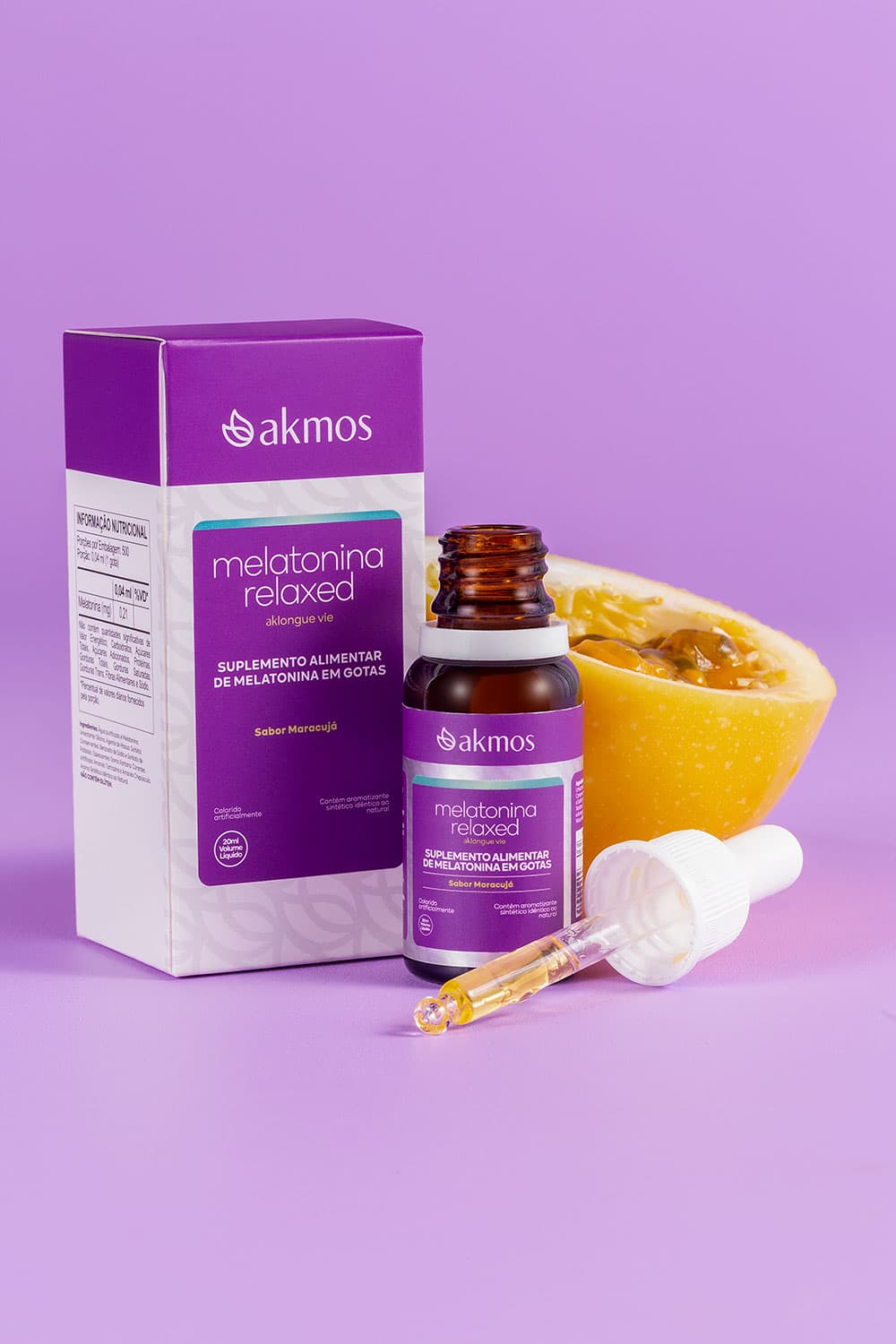
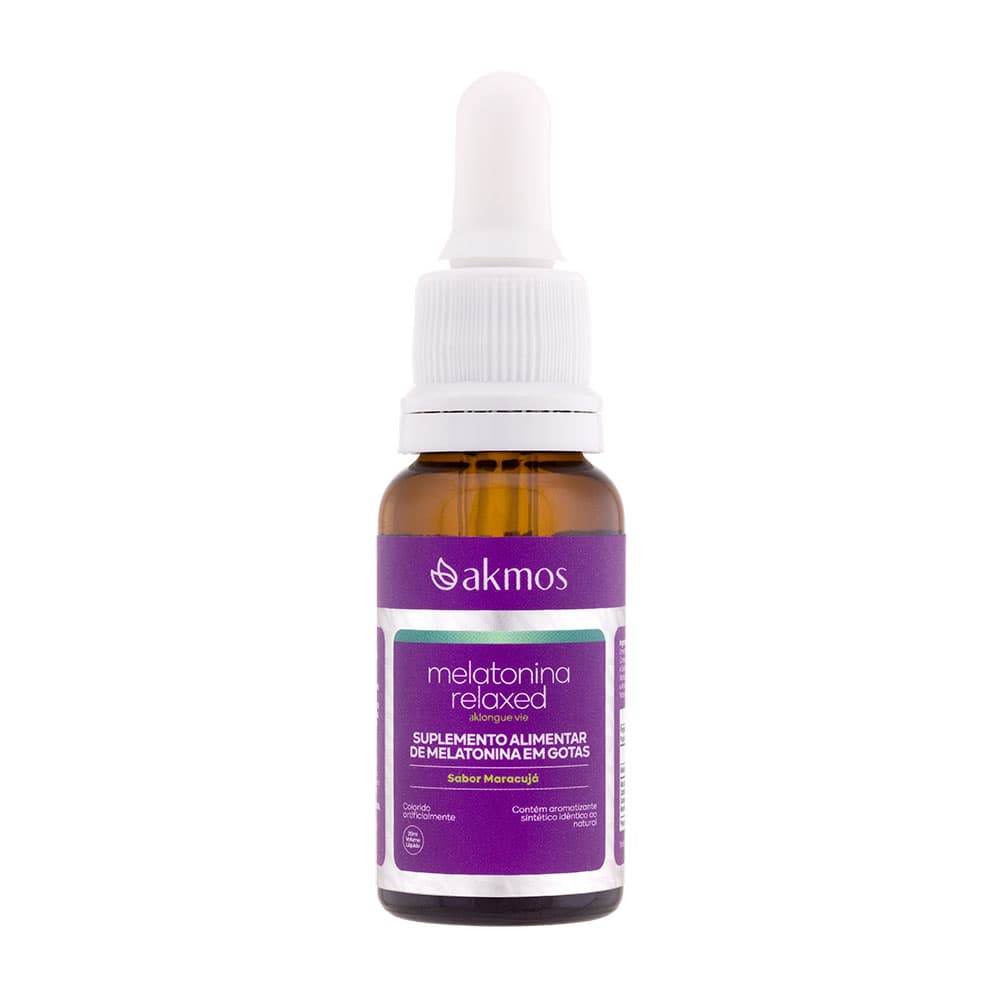
Akmos's Melatonina Relaxed follows that measure: each 0.04 ml serving, one drop, holds 0.21 mg of melatonin. It comes in a 20 ml dropper bottle, passion-fruit flavoured, gluten- and lactose-free according to the brand, to be taken about 30 minutes before bed.
What do the studies say? A meta-analysis of 19 clinical trials with 1,683 people with primary sleep disorders found that melatonin shortens the time to fall asleep by about 7 minutes and adds a little total sleep time. A real effect, but a modest one.
One important detail: most of those trials used 1 to 5 mg a night, well above Brazil's 0.21 mg limit, so their results do not carry straight over to the dose sold here. A 2024 review found the largest effect near 4 mg.
Melatonin makes most sense for the body clock: jet lag, shift changes, a bedtime that has drifted into the small hours. For sleeplessness driven by anxiety, pain or too much caffeine, it helps little.
What usually matters more than any drop: dimmer light and fewer screens in the last hour of the day, a similar wake-up time, weekends included, and morning daylight. Melatonin can be a small adjustment. The routine is still the foundation.
If trouble sleeping lasts for weeks, or you take other medicines, talk to a doctor before starting. This text is for information and does not replace professional advice.
Sources: Ferracioli-Oda et al., PLoS One, 2013 (meta-analysis, 19 trials). American Academy of Family Physicians review, 2021. Dose-response meta-analysis of 26 trials, 2024. Anvisa decision of 14 October 2021 on melatonin in supplements. Product label and page at akmos.com.br, read on 28 October 2026.